August marks the turn. The long, hot UK summer is winding down and the first hints of autumn air are arriving. For your dog, this seasonal shift is a lot more than a change in the weather — it signals a whole new set of grooming needs.
Your dog is literally changing its coat. The short, heat-adapted summer fur is being replaced by a denser winter layer, and the transition can bring shedding, skin irritation, and a few seasonal hygiene challenges you may not have expected.
Here is what to focus on right now to keep your dog comfortable, clean, and ready for the months ahead.
Why the seasonal coat transition matters
Dogs do not just grow a thicker coat in winter. They actively shed the summer layer and replace it with a denser undercoat. This is a built-in biological programme triggered by shorter days and dropping temperatures.
Left unmanaged, the transition can cause:
- Patchy, uneven shedding that leaves your home covered in fur
- Matted areas where the new undercoat gets trapped beneath the old guard hairs
- Itchy skin and irritation as dead hair clogs follicles
- A dull coat that struggles to insulate against the coming cold
The good news is that a few grooming adjustments over the next six to eight weeks make the difference between a smooth transition and a messy, uncomfortable one.
1. Brushing: shift from maintenance to de-shedding
In summer you probably brushed your dog to keep the coat tidy. Right now brushing has a new job: removing that dead summer layer so the winter coat can grow in properly.
What to use
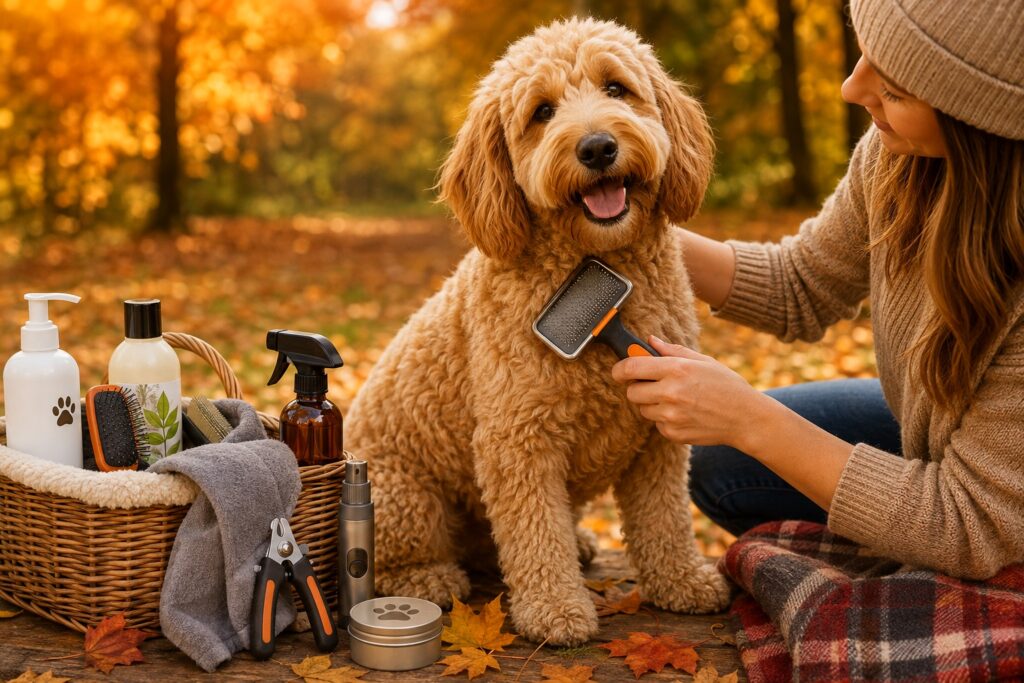
A quality slicker brush or a de-shedding tool will do the most work. The slicker brush lifts loose undercoat, while a dedicated de-shedding tool reaches through the top layer and pulls out the dead undercoat that would otherwise mat or fall out in clumps.
How often
During the transition period aim for two to three thorough brushing sessions a week. Not five-minute speed runs — proper sessions where you work through to the skin and remove the loose undercoat from root to tip. If your dog is a heavy shedder, daily is ideal but every other day is still effective.
2. De-shedding shampoo: give your dog a deep clean
Regular bath shampoos clean the surface. A de-shedding shampoo does something different: it loosens the dead undercoat so it can be brushed out. Using one now, before autumn fully sets in, removes a significant amount of the fur your dog would otherwise shed through your carpets all winter.
Look for a formula with natural ingredients like oatmeal or aloe — it cleans while soothing the skin that is working hard to produce new coat.
3. Skin and coat conditioning: prepare for the cold
The new undercoat needs to come in healthy. A conditioning spray helps detangle the growing coat, adds moisture back into summer-dry skin, and reduces static that builds up as the air cools.
A quick spritz before brushing makes the whole process smoother for both of you.
4. Ear care: summer moisture leaves autumn problems
Summer activities — swimming, beach days, long walks in damp grass — leave moisture in the ear canal. That trapped water is exactly what causes autumn ear infections. A quick ear clean now prevents the visits to the vet later.
5. Nail care: summer growth means longer nails
Summer walks on grass do not wear nails down much. By August the nails have grown significantly, and longer nails change how your dog stands and walks. Trim them now before the wetter autumn when overgrown nails can split or catch.
If your dog is nervous about nail trims, a quiet electric nail grinder lets you take off a tiny amount at a time.
6. A complete grooming kit: save money and time
If you are looking to set up a grooming station at home, a quality grooming kit with a brush, clippers, nail trimmer and comb is far more cost-effective than buying each tool separately. Look for one with comfortable grips and rounded safety tips.
7. Nutrition: support the new coat from the inside
Your dog is producing a completely new layer of fur. That takes energy, protein, and specific fatty acids. Omega-3 and Omega-6 supplements support healthy skin and a glossy, well-insulated coat.
Fish oil is the most studied supplement for dog coat health. Add it to your dog meals now and you will see the difference in coat quality over the coming months.
Quick seasonal checklist
| Task | Frequency | Why |
|---|---|---|
| Deep de-shedding brush | 2–3 times per week | Remove dead summer undercoat |
| De-shedding shampoo bath | Every 2–3 weeks | Loosen and wash out trapped undercoat |
| Conditioning spray before brushing | Every brush session | Detangle and moisturise |
| Ear clean | Once a week | Prevent autumn ear infections |
| Nail trim or grind | Every 2–3 weeks | Comfortable gait and posture |
| Omega-3 supplement | Daily with meals | Healthy new coat growth |
When to see a groomer
A professional groomer can do a thorough de-shedding treatment that removes far more loose undercoat than home brushing alone. They can also spot skin issues that are hidden under the coat — hot spots, fleas, or early-stage skin infections.
Book a groom now before the autumn rush. Groomers fill up quickly once the weather turns and everyone realises their dog needs attention.
Find a local dog groomer on BookMyGroomer:
FAQs
How long does the seasonal coat transition take?
The full transition from summer to winter coat takes about six to eight weeks, but the most intense shedding phase is usually the first three weeks. Start brushing now and you will catch the peak.
Can I bathe my dog with de-shedding shampoo every week?
Not recommended. Weekly bathing strips natural oils and can irritate the skin. Every two to three weeks is the sweet spot — frequent enough to manage the shedding but gentle enough to protect the skin.
My dog barely sheds. Do I still need to brush?
Yes. Low-shedding breeds like Goldendoodles and Labradoodles still produce undercoat that can mat. Brushing prevents those tight mats that require a shave-down — which leaves your dog exposed to the cold.
Will a de-shedding treatment permanently reduce shedding?
Not permanently. It removes the undercoat that is ready to come out, which typically keeps shedding down for four to six weeks. Regular brushing maintains the result.
Is fish oil safe for my dog every day?
Yes, in the correct dose. Follow the manufacturer guidelines on the bottle — typically one capsule per 10–15 kg of body weight. If you are unsure, ask your vet.
My dog hates the brushing. What should I do?
Start short. Two minutes, then a treat. Gradually build up over a few days. A conditioning spray before brushing makes it more comfortable. And if it is too stressful, a groomer can do the work for you.